

Plus: Record number of physicians will serve in Congress and a preview of healthcare priorities for 2027
On Tuesday, Democrats won decisive majorities in both chambers of Congress. Although votes are still being tallied and many races have yet to be called, the new 120th Congress is already taking shape: Democrats will hold at least 250 seats in the House and 54, but potentially as many as 56, in the Senate.
Here’s what ACG members need to know about the midterm elections:
1. New Records and Milestones for Congressional Physicians
Physicians in the 120th Congress
| Democrats | |||
|---|---|---|---|
| Name | State | Since | Specialty |
| Senate | |||
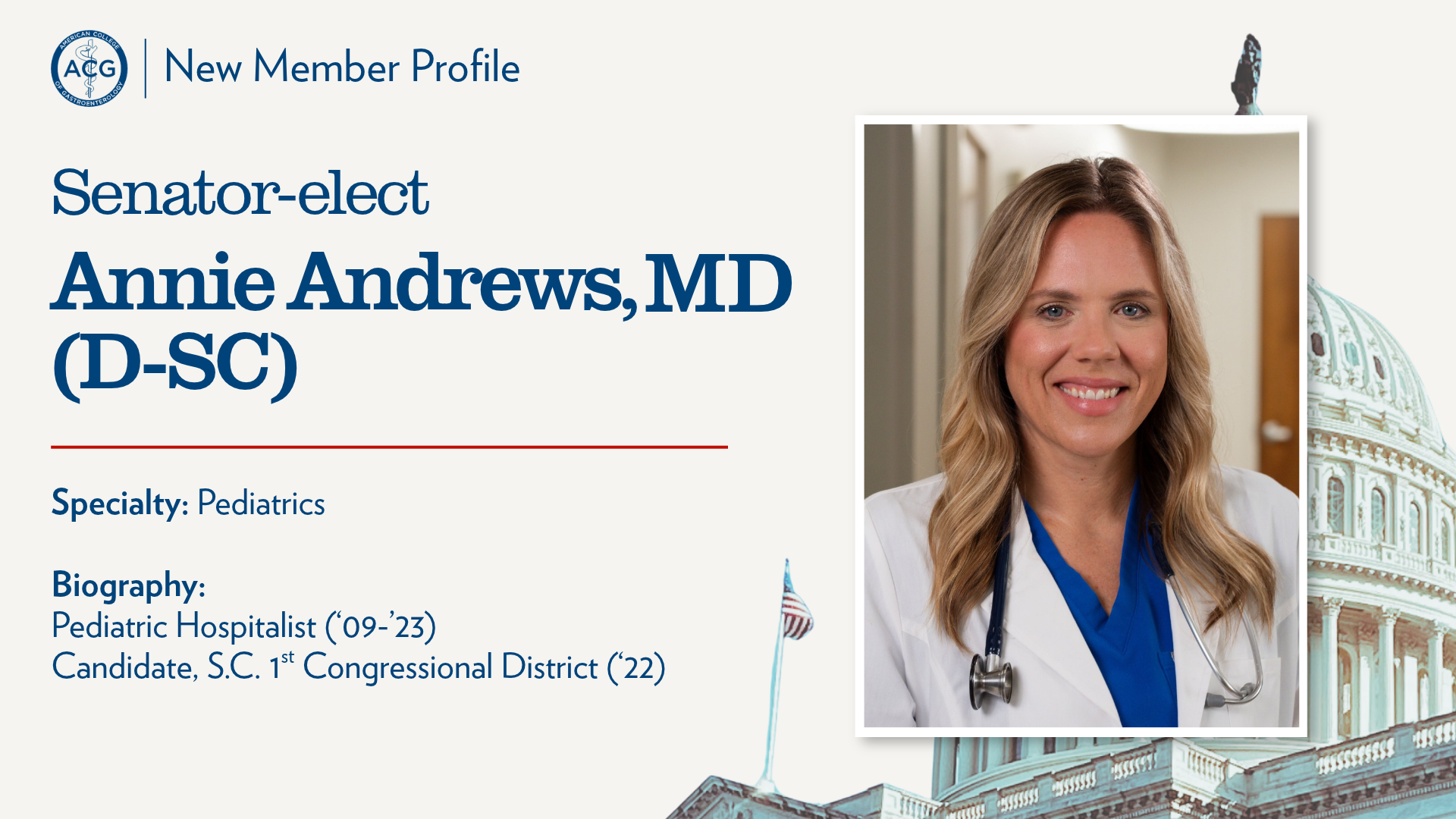
| Annie Andrews, MD | SC | 2027 | Pediatrics |
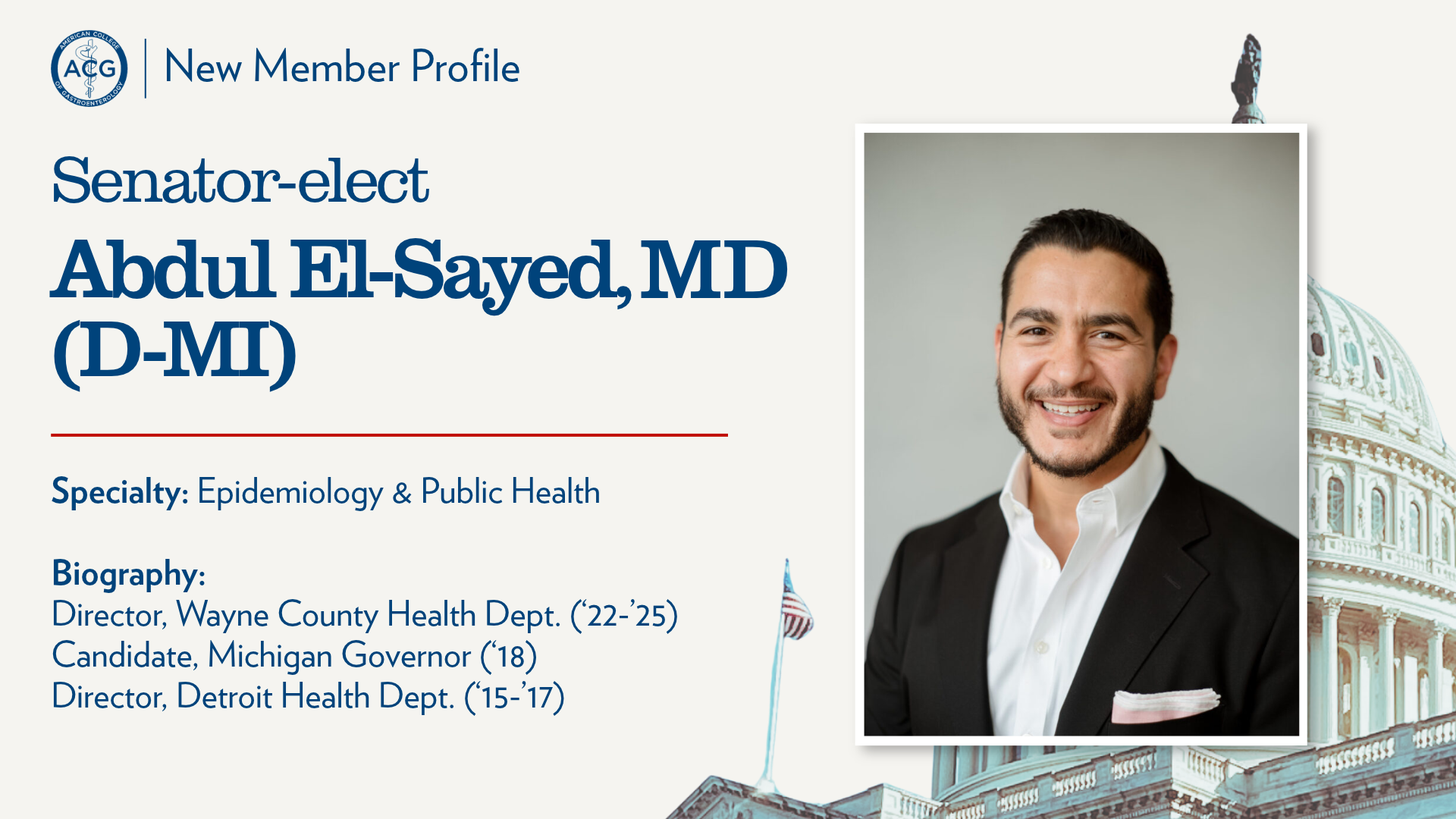
| Abdul El-Sayed, MD | MI | 2027 | N/A |
| House | |||
| Ami Bera, MD | CA | 2013 | Internal Medicine |
| Herb Conaway, MD | NJ | 2025 | Internal Medicine |
| Maxine Dexter, MD | OR | 2025 | Pulmonary and Critical Care |
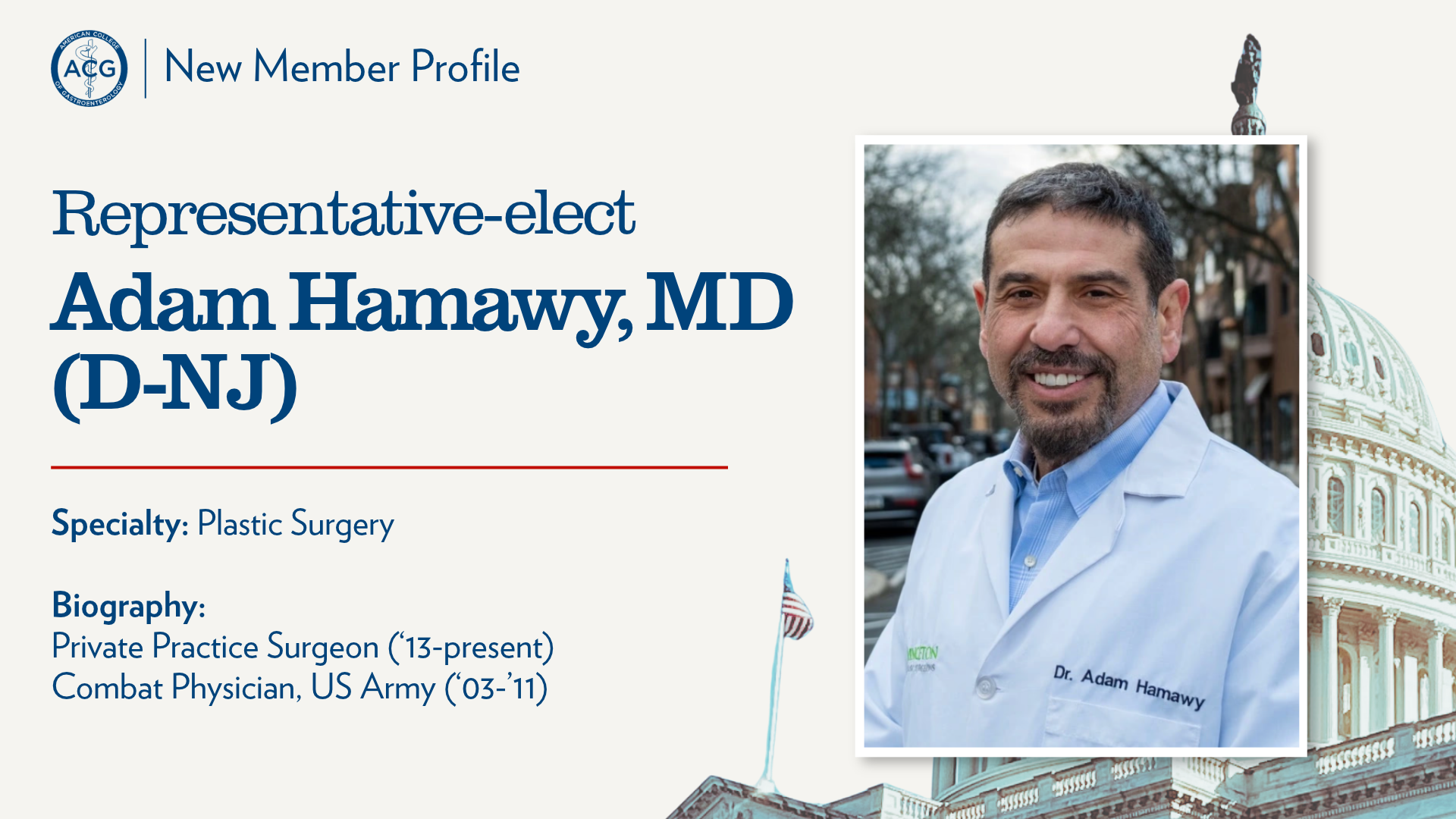
| Adam Hamawy, MD | NJ | 2027 | Plastic Surgery |
| Kelly Morrison, MD | MN | 2025 | OB/GYN |
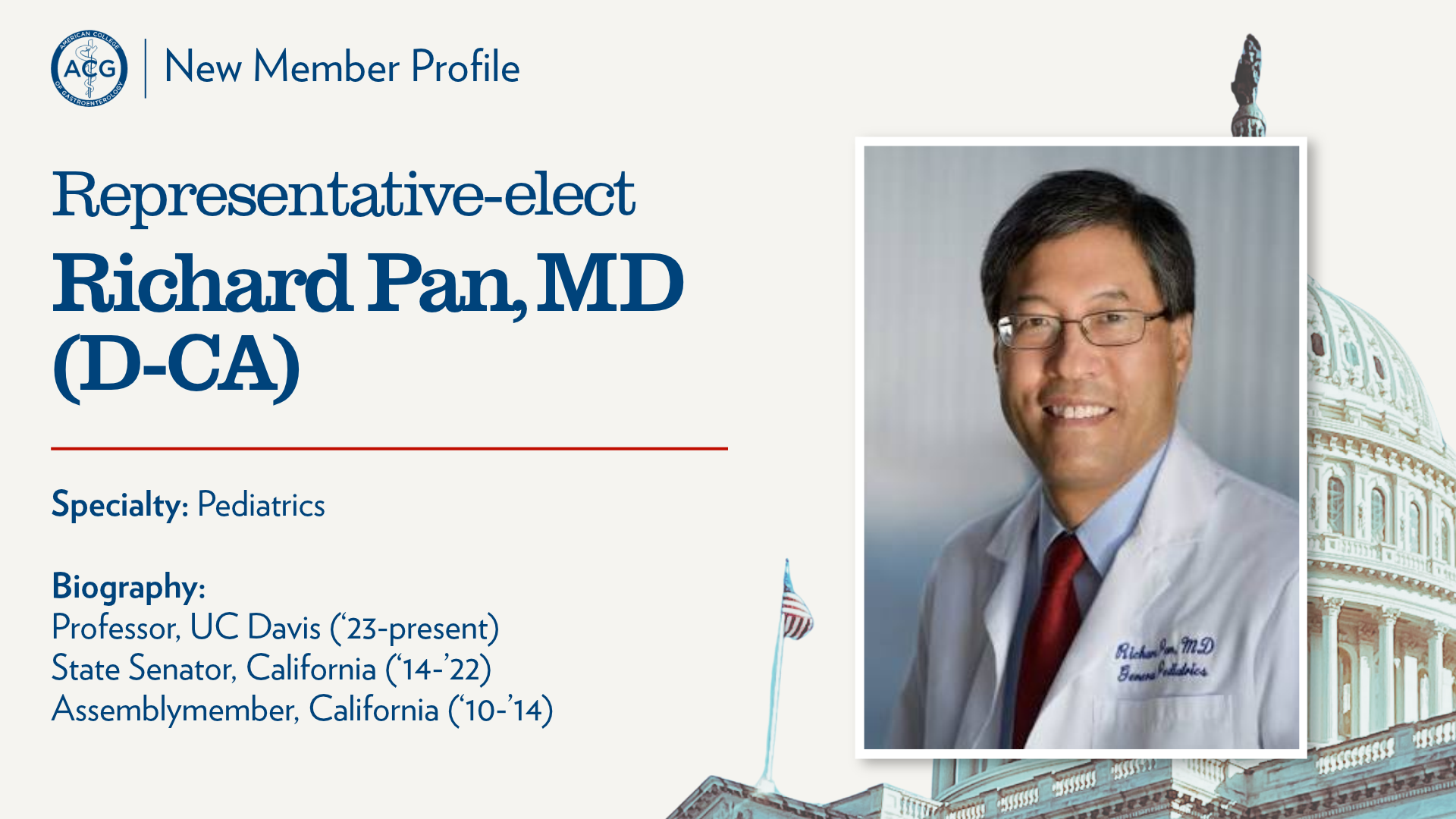
| Richard Pan, MD | CA | 2027 | Pediatrics |
| Raul Ruiz, MD | CA | 2013 | Emergency Medicine |
| Kim Schrier, MD | WA | 2019 | Pediatrics |
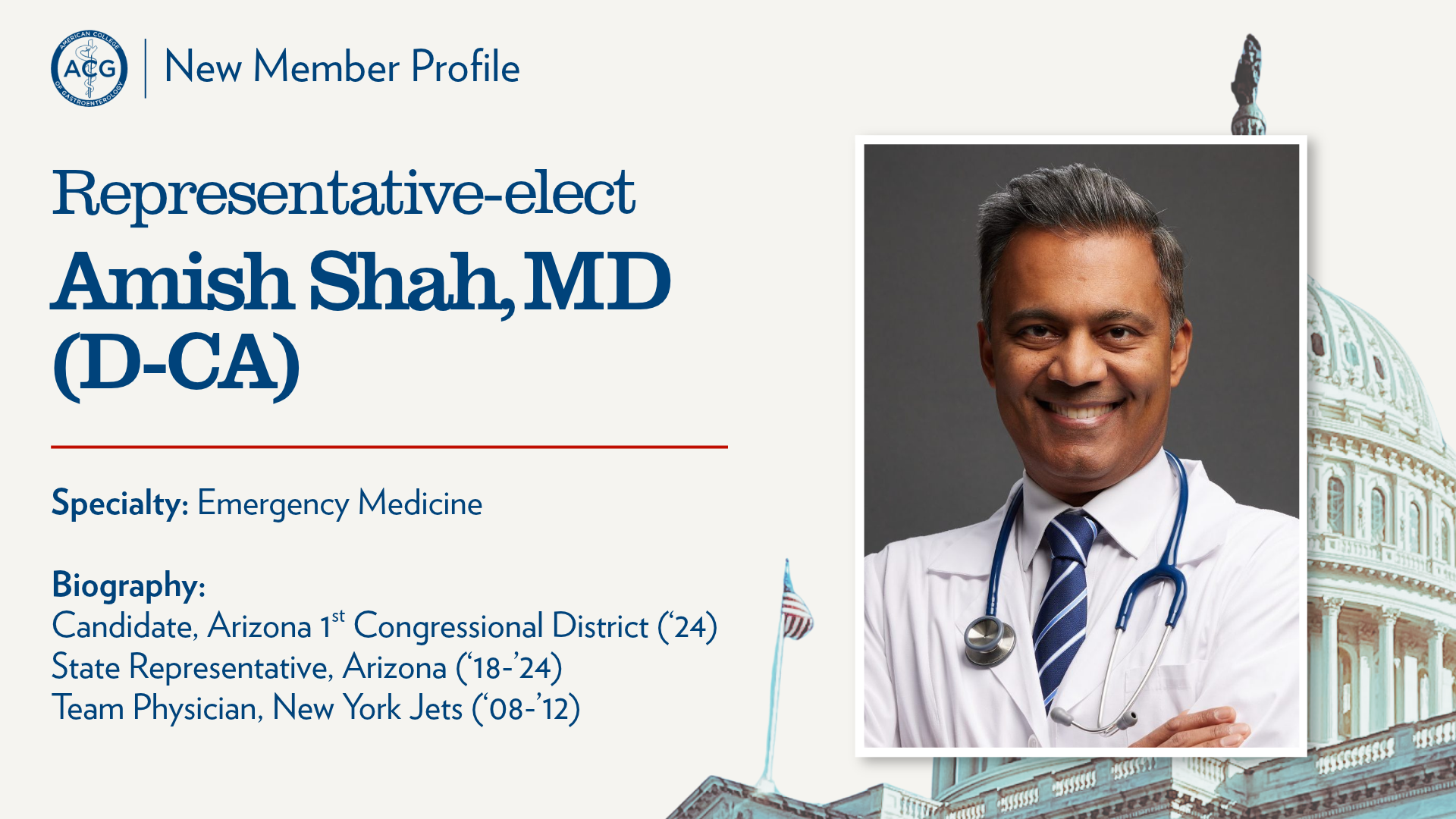
| Amish Shah, MD | AZ | 2027 | Emergency Medicine |
| Republicans | |||
|---|---|---|---|
| Name | State | Since | Specialty |
| Senate | |||
| John Barrasso, MD | WY | 2007 | Orthopedic Surgery |
| Rand Paul, MD | KY | 2011 | Ophthalmology |
| House | |||
| John Cowan, MD | GA | 2027 | Neurosurgery |
| Andy Harris, MD | MD | 2011 | Anesthesiology |
| Ronny Jackson, MD | TX | 2021 | Emergency Medicine |
| John Joyce, MD | PA | 2019 | Dermatology |
| Mike Kennedy, MD | UT | 2025 | Family Medicine |
| Rich McCormick, MD | GA | 2023 | Emergency Medicine |
| Greg Murphy, MD * | NC | 2019 | Urology and Renal Transplantation |
| Bob Onder, MD | MO | 2025 | Allergy and Asthma |
* Rep. Murphy is currently leading in his race, but it has not been officially called as of Nov. 6. ACG does not predict outcomes or endorse candidates.
As ACG suggested in October, it would not take much for a record number of physicians to serve in the 120th Congress – and in fact, other milestones were also set.
By Nov. 5, 20 physicians have locked in seats for the new Congress. One incumbent physician, Rep. Greg Murphy (R-NC), leads in his race, though it has not been officially called. If Rep. Murphy prevails, the 120th Congress will officially set the record with 21 physicians.
Tuesday’s elections came with a few other unexpected results.
While four physicians ultimately lost (Sen. Roger Marshall (R-KS), Rep. Mariannette Miller-Meeks (R-IA), Rep. Scott DesJarlais (R-TN), and Republican nominee Ralph Alvarado in Kentucky) the freshman class of six new physician House Representatives and Senators will be the largest in over a decade.
In the Senate, Annie Andrews (D-SC) notched an upset victory and will become the first pediatrician to serve in the upper chamber. She will be joined by fellow Democrat Abdul El-Sayed (D-MI), who holds an MD but did not complete residency, as the first Democratic doctors in the Senate in nearly sixty years.
But perhaps the most eye-opening outcome of the night is that the 120th Congress will have more Democratic (11) than GOP (9 or 10, depending on Rep. Murphy) physicians, flipping the partisan balance for the first time in decades, according to ACG’s research. This caps a recent trend of more physician Democrats in Congress, which included them launching the Congressional Doctors Caucus in May 2025. For years, the overwhelming majority of physicians in Congress were Republicans (between 2011 and 2020, it was 86%).
You can learn more about the new physicians below:

2. Democrats Set Sights on Affordability and Healthcare Issues
The 2026 midterms were undeniably an ‘economy election.’ In fact, according to one exit poll, 89% of voters – regardless of party – said the cost of living was “crucial or major factor” in their decision on who to send to Congress.
Ahead of the election, Congressional Democrats outlined their healthcare priorities, should the party take control.
Back in March, Sen. Ron Wyden (D-OR), Ranking Member of the Senate Finance Committee, and 11 Democratic colleagues outlined their healthcare priorities, addressing cost increases, simplifying healthcare, and taking on corporate greed.
In the House, the ‘Cost-of-Living Healthcare Working Group’, co-chaired by Reps. Alexandria Ocasio-Cortez (D-NY) and Terri Sewell (D-AL), identified eight priorities to address throughout 2027 including: reverse cuts from the One Big Beautiful Bill Act, strengthen and expand Medicare, expand access to affordable and preventive care, and investing in the healthcare workforce, among others.
ACG has endorsed several bipartisan bills flagged by the House working group, including: the Patients First Act (a suite of Medicare reimbursement reforms), the Resident Physician Shortage Act (more Medicare-funded residency spots and likewise supported by ACG’s GI Workforce of the Future Task Force), and the CONNECT for Health Act (permanent Medicare telehealth coverage).
Ultimately, any bill passed by Congress could face stiff opposition in the White House, though President Trump suggested he was prepared to work with the new Democratic majorities.
3. Got the Public Service Itch? ACG’s VGR Will Help You Take the Next Step

The likely record-setting number of physicians in Congress reflects a growing conviction that influencing health policy as an outsider is no longer sufficient. If the midterm elections have you inspired and considering whether you should make that same leap, ACG is here to help you explore it at any level of the ballot: federal, state, or even local.
Recently, ACG’s National Affairs Action Network proudly hosted a special Virtual Grand Rounds: ‘So You Want to Run for Office? Here’s How!’ In our training, we covered what to consider when running for office, positions to consider, how to get started, and tips for launching a successful campaign.