

Oral Vancomycin in Primary Sclerosing Cholangitis: A Biochemical Signal Without Meaningful Clinical Improvement

A. Ali Khalifa, MD¹; Elsie Ennin, MD²; Nikki Duong, MD²
¹AdventHealth Medical Group, Florida; ²Division of Gastroenterology and Hepatology, Stanford University School of Medicine, Stanford, CA
This summary reviews Eaton JE, Clayton MW, Harnois DM, et al. Oral vancomycin is not associated with meaningful changes in liver-related end points among adults with primary sclerosing cholangitis: A randomized, placebo-controlled trial. Am J Gastroenterol. Online ahead of print, Jul 2026.
Access the article through The American Journal of Gastroenterology
Correspondence to Nikki Duong, MD. Associate Editor. Email: EBGI@gi.org
Keywords: Primary sclerosing cholangitis, oral vancomycin, alkaline phosphatase, cholestatic liver disease, microbiome, surrogate endpoints
Question: Among adults with large-duct primary sclerosing cholangitis (PSC) and a serum alkaline phosphatase (SAP) greater than 1.5 times the upper limit of normal (ULN), does 18 months of oral vancomycin (OV) normalize SAP or improve other markers of disease severity compared with placebo?Design: This was a phase 3, multicenter, randomized, double-blind, placebo-controlled trial with 1:1 allocation, 18 months of treatment, and a 6-month washout. Randomization was stratified by inflammatory bowel disease (IBD) status using permuted blocks of 6. Enrollment opened in January 2020 and was terminated early in March 2025 because of slow recruitment.
Setting: The study was conducted in 3 Mayo Clinic sites in the United States: Rochester, Minnesota; Jacksonville, Florida; and Phoenix/Scottsdale, Arizona.
Patients: Patients were adults aged 18 to 76 years with large-duct PSC, SAP greater than 1.5 times ULN, total bilirubin no greater than 2 times ULN, and imaging within 6 months of enrollment that did not suggest hepatobiliary malignancy. Participants needed stable doses of ursodeoxycholic acid (UDCA), probiotics, and IBD medications for 3 months before enrollment. Key exclusions included concomitant liver disease other than hepatic steatosis on imaging, creatinine clearance <60 mL/min, hepatic decompensation, model for end-stage liver disease (MELD) 3.0 >14, prior liver transplantation or anticipated need for transplantation during the study period, suspected or confirmed malignancy, prior hepatobiliary cancer, pregnancy or breastfeeding, and endoscopic retrograde cholangiopancreatography, ascending cholangitis, or antibiotic use within the preceding 3 months. Of 230 eligible adults, 148 declined participation.
Intervention: Participants were randomized 1:1 to oral vancomycin or an identical placebo, with randomization stratified by IBD status. Oral vancomycin was started at 125 mg 4 times daily. If SAP had not normalized by month 6, the dose was increased to 250 mg 4 times daily; if SAP had not normalized by month 12, the dose was increased to 375 mg 4 times daily for the remainder of treatment. Laboratory testing was obtained every 3 months. Liver stiffness was measured by transient elastography at baseline and months 6, 12, and 18, and the 5-D itch scale, PBC-40, Short Inflammatory Bowel Disease Questionnaire, and Ulcerative Colitis Clinical Score were collected during study visits. Participants and study staff were blinded, except for statisticians and the pharmacists preparing the formulations.
Outcomes: The primary endpoint was SAP normalization at month 18. Secondary endpoints included changes in liver tests, Mayo PSC risk score, MELD 3.0, liver stiffness, estimated fibrosis stage, 5-D itch score, PBC-40 domains, Short Inflammatory Bowel Disease Questionnaire score, and Ulcerative Colitis Clinical Score. Fibrosis stage was estimated using previously published liver stiffness cutoffs. SAP changes were also assessed in select subgroups based on IBD status, UDCA use, and cirrhosis as determined by liver stiffness. Post hoc analyses evaluated changes in the Anali score among participants who completed at least 12 months of the study and had 2 magnetic resonance cholangiopancreatography examinations available for review.
Data Analysis: The intention-to-treat (ITT) population included all 82 randomized participants; those without month-18 data were classified as nonresponders for the primary endpoint. The modified ITT (mITT) population included 73 participants with at least 1 post-baseline assessment and used the last observation carried forward for the primary endpoint, while the per-protocol population included 35 participants who completed the month-18 assessment. Continuous secondary outcomes were analyzed using mixed-effects models incorporating all available data. Sensitivity analyses for the primary endpoint were performed under the ITT, mITT, and per-protocol frameworks using an alternative definition of SAP response: SAP ≤1.5 times ULN and a ≥40% reduction from baseline. A 2-sided alpha of 0.05 was used.
Funding: The US Food and Drug Administration Office of Orphan Products Development (grant FD-R-6102). Azurity Pharmaceuticals supplied the investigational product and matching placebo. ClinicalTrials.gov identifier NCT03710122.
Results: A total of 82 participants were randomized (Figure 1): 42 to placebo and 40 to oral vancomycin. Seventy-three participants (placebo n=39, oral vancomycin n=34) had at least 1 post-baseline outcome assessment, and 35 (placebo n=20, oral vancomycin n=15) completed the full 18-month treatment period. Among the 47 participants who did not complete the study, 23 voluntarily withdrew consent; other reasons for discontinuation included disease progression (n=4), investigator decision (n=4), toxicity or adverse events (n=8), and early study termination (n=8). Participants who withdrew early were less likely to rate their baseline health as excellent or very good compared with those who completed the study (23.4% vs 54.5%, P<0.01), despite similar baseline liver tests, liver stiffness, MELD, and Mayo PSC risk scores. Median reported adherence at each time period was ≥98% in both treatment groups. All but 1 participant receiving oral vancomycin underwent dose escalation at months 6 and 12.
The primary endpoint of SAP normalization at month 18 did not differ between placebo and oral vancomycin (5.0% vs 6.7%, respectively; P=1.00). Rates of achieving SAP <1.5 times ULN were also identical (20.0% in each group), and the proportion achieving a ≥40% reduction from baseline was similar between groups. These findings were consistent across ITT, modified ITT, and per-protocol analyses. SAP analyzed as a continuous measure decreased by 21.9% with OV compared with a 1.5% increase with placebo (P = 0.03) (Figure 2).
Between-group differences were 0.0 for the Mayo PSC risk score (P = 0.88), −4.2 kPa for liver stiffness (P = 0.15), −0.6 for MELD 3.0 (P = 0.82), −0.9 for the 5-D itch scale (P = 0.46), and +3.5 for the Short Inflammatory Bowel Disease Questionnaire (P = 0.14). Sustained fibrosis improvement at month 18 was not more common with OV (OV 14.3% vs placebo 30.8%, P = 0.61). Liver stiffness findings were unchanged in a sensitivity analysis excluding participants without baseline liver stiffness measurements (P=0.13). A borderline difference favored oral vancomycin in the PBC-40 emotional domain (P=0.05), whereas the other PBC-40 domains did not significantly improve. Among participants with IBD, changes in Short Inflammatory Bowel Disease Questionnaire and Ulcerative Colitis Clinical Score scores were similar between treatment groups. Anali scores with and without gadolinium did not change significantly in either group.
Adverse events occurred in 73.8% of placebo-treated and 80.0% of oral vancomycin-treated participants (P=0.51), while serious adverse events occurred at similar rates (16.7% vs 12.5%; P=0.59). Teeth and/or tongue discoloration was the most characteristic treatment-related adverse event, occurring in 17.5% of participants receiving oral vancomycin and none receiving placebo. The discoloration resolved in 6 of the 7 affected participants. No serious adverse event was attributed to the study drug.
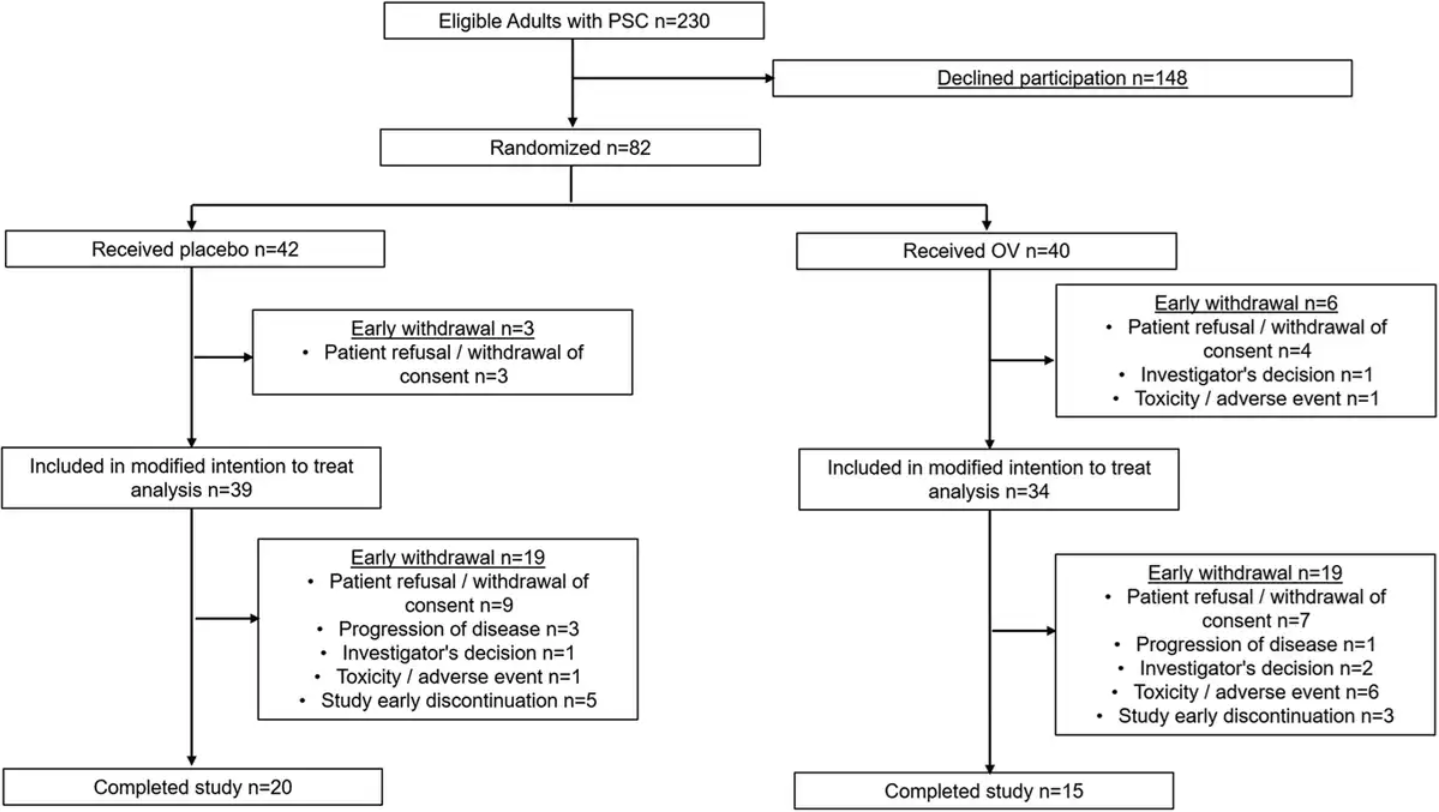
Figure 1. Patient disposition throughout the trial. OV, oral vancomycin; PSC, primary sclerosing cholangitis. Reproduced from Eaton et al.

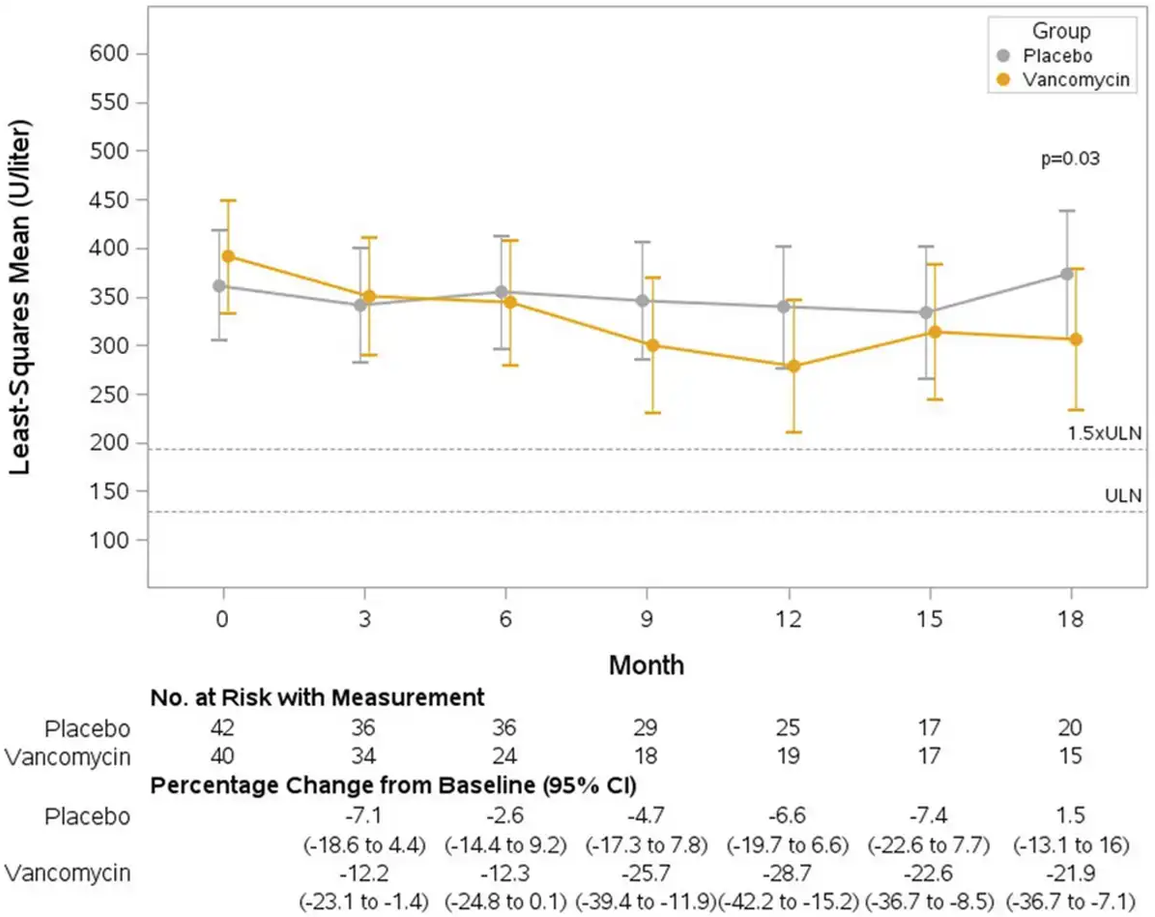
Figure 2. Change in serum alkaline phosphatase during treatment with oral vancomycin versus placebo. ULN, upper limit of normal. Reproduced from Figure 3 of Eaton et al.

COMMENTARY
Why Is This Important?
Primary sclerosing cholangitis remains a progressive cholestatic liver disease without an approved medical therapy that has been shown to alter its natural history. UDCA may improve liver biochemistries in select patients, but it has not been shown to improve transplant-free survival.1 Management therefore focuses on monitoring disease progression, treating complications, conducting cancer surveillance, and referring patients for liver transplantation when appropriate.
The gut–liver axis has emerged as an attractive therapeutic target in PSC. Alterations in the intestinal microbiome, bile acid signaling, and mucosal immune responses have all been implicated in PSC pathogenesis, although the mechanisms linking intestinal dysbiosis to biliary injury remain incompletely understood.2
Much of the early enthusiasm for oral vancomycin arose from pediatric studies. In a small series of 14 children with PSC, Davies et al. reported improvements in liver biochemistries, inflammatory markers, and clinical symptoms following oral vancomycin therapy. Alanine aminotransferase, gamma-glutamyl transferase, and erythrocyte sedimentation rate normalized in 10 of 14 children; the remaining 4, all of whom had pre-existing cirrhosis, improved without normalization.3 Subsequent pediatric reports similarly suggested biochemical benefit. However, larger pediatric studies have been less promising. In a propensity-matched analysis from the Pediatric PSC Consortium, Deneau et al. compared 88 children treated with oral vancomycin with 88 receiving UDCA and 88 receiving neither therapy. At 1 year, gamma-glutamyl transferase normalization and fibrosis outcomes were similar across groups, as was longer-term liver transplant listing, while spontaneous biochemical normalization was common among untreated children with milder disease.4
Notably, one of the more consistent signals for oral vancomycin has involved intestinal disease. In a matched analysis from the Pediatric PSC Consortium, vancomycin was associated with higher odds of clinical remission (adjusted odds ratio 5.24) and endoscopic remission (adjusted odds ratio 2.76) in PSC-associated inflammatory bowel disease.5 This raises an important interpretive challenge: distinguishing a beneficial effect on intestinal inflammation from a direct disease-modifying effect on PSC itself.
Adult data have also been limited. In a 4-arm dose-comparison trial, Tabibian et al. randomized 35 adults to low- or high-dose oral vancomycin or metronidazole and reported a significant reduction in SAP at 12 weeks in the vancomycin groups.6 In a separate 12-week placebo-controlled trial of 29 patients, Rahimpour et al. reported a significant reduction in the Mayo PSC risk score with oral vancomycin without a statistically significant change in SAP.7 These studies were small and short in duration, leaving uncertainty as to whether biochemical improvements translate into meaningful changes in PSC progression. Current American Association for the Study of Liver Diseases guidance therefore considers the evidence insufficient to recommend oral vancomycin for treatment of PSC.1 This trial is important because it gives us a much better answer to a question that comes up fairly often in practice: does lowering alkaline phosphatase with oral vancomycin actually translate into improvement in PSC?
Key Study Findings
The dose-response findings are also interesting. The dose was increased from 125 mg to 250 mg and then 375 mg 4 times daily in patients who had not reached the biochemical target, but this did not produce an additional reduction in SAP. SAP also did not significantly increase after treatment was stopped. Neither finding proves that the reduction in SAP was unrelated to treatment, but together they make the biochemical signal harder to interpret.
Oral vancomycin was generally well tolerated. Teeth and/or tongue discoloration was the most characteristic treatment-related adverse event (17.5%), and no serious adverse event was attributed to the study drug.
Caution
The study should not be interpreted as proof that oral vancomycin has no effect in PSC. The trial was terminated early because recruitment was slow. Eighty-two patients were randomized instead of the planned 94. The authors estimate that the study had about 80% power to detect an absolute difference in SAP normalization of approximately 19% or greater. So, a relatively small treatment effect cannot be excluded.
Attrition is another concern. Patients who withdrew early were less likely to describe their baseline health as excellent or very good and reported more impairment in several PBC-40 domains. This is important because patients with more symptoms or poorer quality of life may be harder to retain in a long clinical trial. At the same time, several findings make a major false-negative result less likely. Withdrawal rates and baseline prognostic characteristics were generally similar between treatment groups; patients who withdrew did not appear to have a hidden biochemical response; and the ITT, modified ITT, and per-protocol analyses were overall consistent.
There are also some interesting subgroup findings. Greater SAP reductions were reported in patients without IBD, those without liver stiffness in the cirrhotic range, and those not taking UDCA. These analyses are small and should be considered hypothesis-generating rather than evidence for selecting patients for treatment.
A second limitation is the primary endpoint itself. Although lower or improving SAP is associated with better prognosis in PSC, spontaneous fluctuations and normalization occur, and it remains unproven that a treatment-induced decline in alkaline phosphatase predicts improvement in long-term clinical outcomes.11 No surrogate biomarker has been sufficiently validated to replace clinical endpoints such as hepatic decompensation, hepatobiliary cancer, transplantation, or death in PSC trials. The study was not designed or powered to determine whether oral vancomycin affects these longer-term clinical outcomes.
Chronic antimicrobial exposure is an additional consideration: although no vancomycin-resistant enterococcal infections were observed, participants were not systematically screened for asymptomatic colonization with resistant organisms, limiting conclusions about the broader antimicrobial-resistance risk of prolonged therapy.
My Practice
In our practice, PSC is one of a trio of autoimmune diseases that we encounter, in addition to autoimmune hepatitis and primary biliary cholangitis, with far lower prevalence than commonly encountered liver diseases such as metabolic dysfuction-associated steatotic liver disease. Moreover, PSC is the only common autoimmune liver disease without clearly defined first-line therapy. As such, this can often be a challenging diagnosis to manage for both our patients and physicians, given the lack of treatment options. Patients have concerns about long-term complications including the risk of cholangiocarcinoma and wish to avoid liver transplant if possible. In the short term, they are often concerned with normalization of the serum alkaline phosphatase, preventing recurrent episodes of cholangitis, and reducing symptoms such as pruritus, in addition to normalization of the serum alkaline phosphatase.
We do not routinely start OV for PSC outside of a clinical trial though there are Hepatolgists and Gastroenterologists who will prescribe OV in select cases. Previously, there was enough uncertainty that a time-limited trial could at least be discussed with some patients, particularly when alkaline phosphatase remained elevated, as there are few other therapeutic options. This randomized trial, albeit small, provides additional evidence that the efficacy of OV for PSC is not yet established. For patients who are not eligible for or interested in a clinical trial and have persistently elevated alkaline phosphatase, we consider UDCA at 13–23 mg/kg/day, consistent with American Association for the Study of Liver Diseases guidance and continue it only if there is a meaningful reduction in alkaline phosphatase or improvement in symptoms after 12 months; doses of 28 mg/kg/day or higher should be avoided.
The more common situation, however, is the patient who presents and is already taking OV. We would approach this situation as a shared decision-making process rather than simply telling the patient to stop. Many patients have been taking OV for years, sometimes because they started it when they were younger or because they saw a substantial improvement in their liver tests. It is important to acknowledge that the biochemical response is real. The challenge is that reduction in SAP was not accompanied by improvement in the other measures of PSC severity in this trial and has yet to be established A lower alkaline phosphatase may seem reassuring, but by itself it does not tell us that the biliary disease is improving. For a patient already taking OV, we would therefore discuss whether there is a clear reason to continue it, review what has changed since it was started, and consider discontinuation if the only measurable benefit has been a lower alkaline phosphatase.
Another issue is long-term antibiotic exposure. These patients may eventually require antibiotics for episodes of bacterial cholangitis, and repeated antibiotic exposure has implications for antimicrobial resistance and the intestinal microbiome. In the pooled PSC-IBD literature, VRE was identified in 8.7% of 69 patients in whom it was assessed.9
The current trial primarily evaluated liver-related efficacy and should not be interpreted as definitively excluding an intestinal benefit in selected patients with active PSC-IBD.5 A systematic review and pooled analysis of 21 open-label, non-controlled studies including 290 patients with PSC-IBD reported clinical response in 47.6% and clinical remission in 43.5% of patients treated with oral vancomycin.9 More recently, a small prospective open-label study of 15 patients with active PSC-IBD found clinical remission in 12 patients after 4 weeks of oral vancomycin, with recurrence of colitis activity following drug withdrawal.10 Thus, in patients with concomitant IBD, our approach is to co-manage patients closely with their IBD specialist in order to carefully consider oral vancomycin.
For now, our approach to PSC management focuses on surveillance for hepatobiliary malignancy, evaluation and treatment of biliary strictures, cholangitis, pruritus, management of portal hypertensive complications, appropriate colorectal cancer surveillance in patients with PSC-IBD, attention to bone density and fat-soluble vitamins, and timely referral for liver transplantation when indicated.
For Future Research
Future studies should prioritize endpoints that more reliably reflect disease progression. SAP may remain useful as one component of disease assessment, but a biochemical response alone is insufficient to establish disease modification. The International PSC Study Group consensus concluded that no candidate surrogate, including ALP, currently exceeds level 3 validation and recommended combining multiple endpoints. Quantitative imaging validated fibrosis measures, patient-reported outcomes, and clinical events such as hepatic decompensation, transplantation, and liver-related death will be important components of future trial design.
Given the slow recruitment and substantial attrition in this trial, future PSC studies should also prioritize strategies that reduce participant burden and improve retention, particularly when prolonged follow-up is required.12 Future studies should prioritize validated clinical or surrogate endpoints, longer follow-up, and strategies to improve retention and reduce the burden of frequent visits and 4-times-daily dosing.
Given the modest biochemical signal without improvement in other disease measures, further evaluation of microbiome-directed therapies should focus on identifying patients most likely to benefit while addressing antimicrobial resistance and other long-term safety concerns.
For now, the important message is relatively simple: oral vancomycin was associated with a modest reduction in alkaline phosphatase, but this biochemical change was not accompanied by improvement in the primary endpoint or other markers of PSC disease severity and quality of life.
Conflict of Interest
The authors report no conflicts of interest.
IBD, inflammatory bowel disease; ITT, intention-to-treat; mITT, modified ITT; MELD, model for end-stage liver disease; OV, oral vancomycin; PSC, primary sclerosing cholangitis; SAP, serum alkaline phosphatase; UDCA, ursodeoxycholic acid; ULN, upper limit of normal.
REFERENCES
- Bowlus CL, Arrivé L, Bergquist A, et al. AASLD practice guidance on primary sclerosing cholangitis and cholangiocarcinoma. Hepatol. 2023.
- Hov JR, Karlsen TH. The microbiota and the gut–liver axis in primary sclerosing cholangitis. Nat. Rev. Gastroenterol. Hepatol. 2023; 20:135-154.
- Davies YK, Cox KM, Abdullah BA, et al. Long-term treatment of primary sclerosing cholangitis in children with oral vancomycin: an immunomodulating antibiotic. J Pediatr Gastroenterol Nutr. 2008;47(1):61–67.
- Deneau MR, Mack C, Mogul D, et al. Oral vancomycin, ursodeoxycholic acid, or no therapy for pediatric primary sclerosing cholangitis: A matched analysis. Hepatol. 2021;73(3):1061-1073.
- Ricciuto A, Liu K, El-Matary W, et al. Oral vancomycin is associated with improved inflammatory bowel disease clinical outcomes in primary sclerosing cholangitis-associated inflammatory bowel disease (PSC-IBD): A matched analysis from the Paediatric PSC Consortium. Aliment Pharmacol Ther. 2024; 59:1236–1247.
- Tabibian JH, Weeding E, Jorgensen RA, et al. Randomised clinical trial: Vancomycin or metronidazole in patients with primary sclerosing cholangitis — a pilot study. Aliment Pharmacol Ther. 2013;37(6):604–612.
- Rahimpour S, Nasiri-Toosi M, Khalili H, et al. A triple blinded, randomized, placebo-controlled clinical trial to evaluate the efficacy and safety of oral vancomycin in primary sclerosing cholangitis: A pilot study. J Gastrointest Liver Dis. 2016;25(4):457–464.
- Eaton JE, Clayton MW, Harnois DM, et al. Oral vancomycin is not associated with meaningful changes in liver-related end points among adults with primary sclerosing cholangitis: A randomized, placebo-controlled trial. Am J Gastroenterol. Online ahead of print, Jul 2026.
- Sannaa W, Almasry M, Peedikayil M, et al. Effectiveness and safety of oral vancomycin for the treatment of inflammatory bowel disease associated with primary sclerosing cholangitis: a systematic review and pooled analysis. Ther Adv Gastroenterol. 2025;18.
- Quraishi MN, Cheesbrough J, Rimmer P, et al. Open label vancomycin in primary sclerosing cholangitis–inflammatory bowel disease: improved colonic disease activity and associations with changes in host-microbiome-metabolomic signatures. J Crohn’s Colitis. 2025;19(2).
- Li M, Pai RA, Gomel R, et al. Patient-focused drug development in primary sclerosing cholangitis: Insights on patient priorities and involvement in clinical trials. Hepatol Commun. 2024;8(6):e0433.